As a journalist for 11 years and a professional tour guide since 2015, I’ve seen that Bucharest is rarely a case of ‘love at first sight’ for those navigating it alone; its authentic history is often hidden behind layers of architectural chaos. I created this guide to help independent travelers—especially those crafting their own itineraries—move beyond the typical tourist loop of the Old Town and the Parliament to truly understand the ‘why’ behind our city. My goal is to transfer my professional knowledge to paper so you can stop feeling confused by Bucharest and start discovering the vibrant, soul-filled capital that I know and love (a process that took some years, to be honest 😊). Of course, it happened over the years, even for me. Safe travels and enjoy your adventures in Bucharest!
The Foundations & The Old Town
Medieval Bucharest is difficult to see today due to a combination of foreign invasions, natural disasters, and urban restructuring. Its original footprint was quite small, covering only parts of what we now know as the Old Town, Calea Victoriei, and the Unirii, University, and Romana squares.
The Story of the “Mahalas”
To understand Bucharest’s layout, you must understand the Mahala—a Turkish word of Arabic origin meaning “quarter”.
- Historically, innkeepers often set up shop further from the city limits to avoid high taxes.
- Once an inn was established, houses were built around them, and a new mahala was born.
- As the city expanded, these mahalas were absorbed into the city limits, and the innkeepers would move even further out to start again.
Tragically, few of these neighborhoods survived invasions, disasters, or Nicolae Ceaușescu’s “demolition spree”. Most were replaced by massive Communist-era apartment blocks. However, traces remain:
- The Armenian Quarter (Cartierul Armenesc): You can visit the Melic House here; built in the late 17th century, it is one of the oldest private homes in the city.
- Obor: Once a famous mahala, its former glory is gone, but the traditional farmers’ market remains, now housed in a modern building surrounded by Communist architecture.
- The Old Town: This area contains medieval ruins gathered at the Curtea Domnească museum, where Vlad Tepes (the historical inspiration for Dracula) held court in the mid-1400s.
- Must-Sees: Do not miss the Stavropoleos Monastery (early 1700s) or Manuc’s Inn, an impressive 1800s caravanserai built by an Armenian merchant and double spy.
The Belle Époque or “Little Paris” Era
In the late 19th and early 20th centuries, Bucharest blossomed into a sophisticated European capital.
- Calea Victoriei: The “spinal column” of this era. It is lined with landmarks like the National Art Museum (the former Royal Palace), the Athenaeum, the CEC Palace, and Capșa Brasserie, where the intellectual and wealthy elite gathered.
- Dealul Mitropoliei: The Patriarchal Palace was built here in the early 1900s to replace the old Parliament. Today, this entire area is used by the Romanian Orthodox Church.
- Cișmigiu Garden & Queen Elisabeth Boulevard: Cișmigiu is the city’s oldest park, designed to replicate English gardens. The boulevard in front of it was Bucharest’s first modern thoroughfare, where the Royal Family and elites spent their leisure time.
- University Square: A major landmark reflecting both Belle Époque beauty and Communist tragedy. The University building still bears bullet marks from the 1989 Revolution.
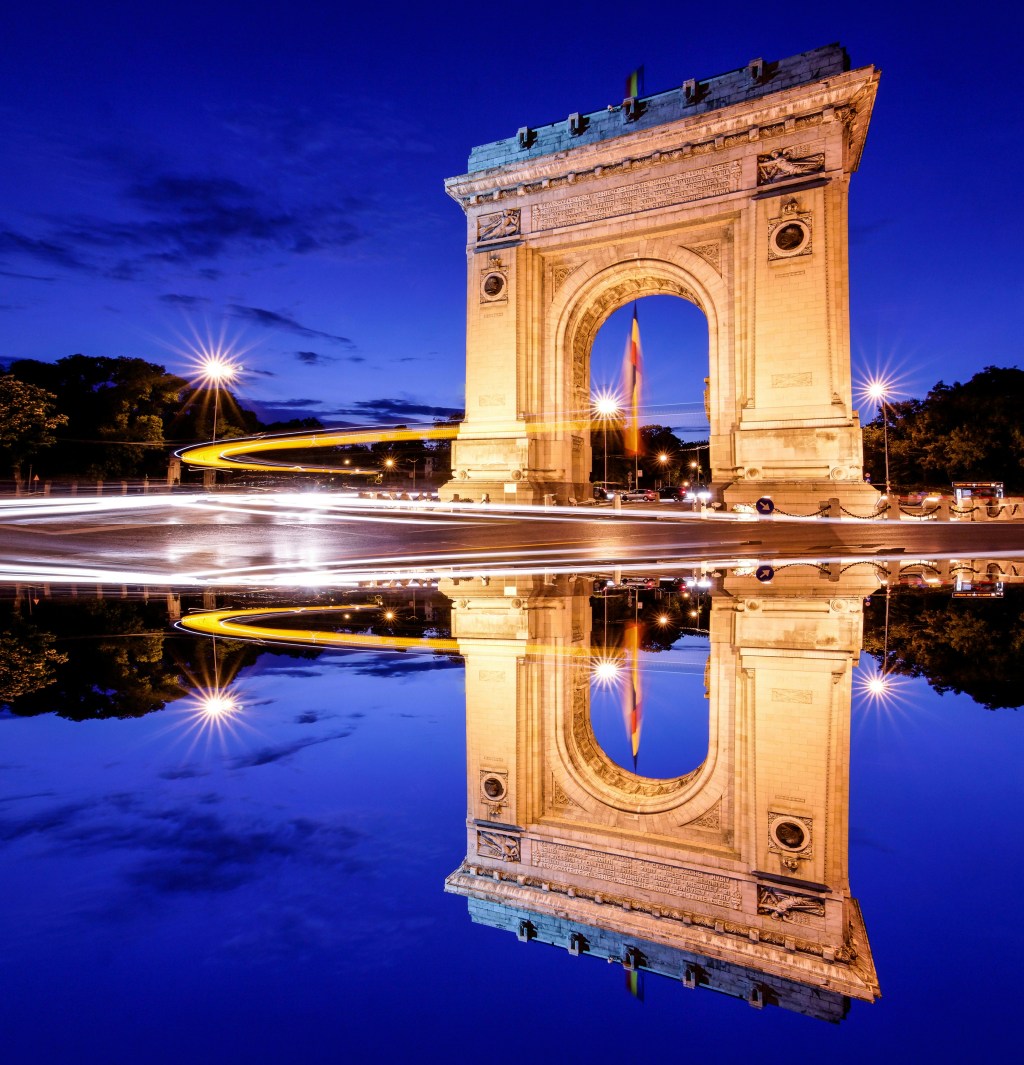
- The North (Cotroceni & Kiseleff): The Cotroceni Quarter developed around the Royal Palace, which now serves as the office for the Romanian President. Nearby, Kiseleff Boulevard features the Arch of Triumph and grand mansions. It is the only street named after a Russian officer, Count Pavel Kiseleff, who famously asked that money meant for a statue of him be used for the city’s benefit instead.
The Communist Past & Urban Contrasts
The Communist regime fundamentally altered Bucharest, creating a landscape of stark social contrasts.
- Working Class vs. The Elite: While laborers were packed into grey, 10-story apartment blocks in areas like Obor, the Communist elite enjoyed luxurious apartments in the Civic Centre.
- Unirii Boulevard: Walking from Constitution Square to Alba Iulia Square reveals these “special” apartment buildings, highlighting the inequality of the era.
- Primăverii Quarter: Originally a worker’s housing project, it was taken over by Communist leaders in 1948 and turned into a luxurious, high-security stronghold. Under Ceaușescu, the street was guarded by the military, and regular pedestrians were forbidden.
- The Parliament Building: This massive structure sits on the ruins of the Uranus Quarter, a historic neighborhood once larger than Venice that was almost entirely demolished for Ceaușescu’s vision.
- Hidden Gems: Near the Parliament, you can find the Antim Ivireanul Monastery (17th century), which was partially moved on wheels to make room for the Civic Centre project.
- The Jewish Quarter: Located behind Unirii Shopping Center, only a tiny fraction of this once-thriving neighborhood survived the 1980s demolitions. Had the 1989 Revolution not occurred, the entire quarter would have been wiped out.
 Ana's Guided Tours